Aside from knowing the cellular changes that occur when certain genes are altered, it's amazing that I went through six years of molecular biology grad school and post doc without giving much thought to health and disease... I mean actual health and disease. i.e. what happens in humans, which is not always what happens in fruit flies. I also never gave much thought to my academic cousins, the MDs, who left me to gather dust in academia after their pre-med college requisites had been completed.
While it is relatively easy to find a link between a fruit fly's "symptoms" (or phenotype) and the genetic alteration that you yourself just induced (I do kind-of miss the weird God-like high that comes with that), it is much harder to do the same in humans. For one, human troubles are less likely to come from experimentation ;-). For another, we don't really have access as of yet to good molecular signposts for what is truly wrong biologically--doctors' tools for diagnosis (X-rays, blood work-ups, cultures, MRIs) are still pretty coarse.
Fortunately (and in contrast with flies), humans do have the gift of speech and of describing what ails them. When diagnosing a patient, doctors thus rely heavily on communication with the patient or his family members. They depend on this information to interpret the rough biological measures of what is happening at the organ/tissue level. But then there's communication and communication, and not all doctors have the skills, inclination, time, or mindset to appropriately seek information from the patient and integrate it with biological data. Even when doctors do have all the information they need, they can still make cognitive errors in determining a diagnosis or the best treatment option. Errors might come from lack of experience or from too much experience (biases for common ailments over rare ones), they might come from biases towards the patient or his/her statistical demographics, or they might even come from preferences for procedures that are financially advantageous for the doctor.
These pitfalls of medical practice and others are discussed in Jerome Groopman's book "How Doctor's Think", which is intended as a sort of patient's guide to a doctor's mind. The idea is that by recognizing the areas where doctors might fail, patients might be able to steer their physician into working at their best capacity.
I'm not sure if Dr. Groopman's book has been helpful in patient's lives but, for me, his book explained in detail the pressures on a doctor's mind. It also made me realize the difficulties associated with medical care--few of which have to do with science and technology and most of which have to do with the health care system as well as doctor's personal differences in associating with others. With such complex problems in the "real world", Groopman's book definitely made me appreciate the relative preciseness of science at "the fruit fly level" and the miles we have to go before human medicine is as precise as that.
Tuesday, December 30, 2008
How Doctors Think-Book Review
Friday, October 05, 2007
Los Origenes de Sefiní
Si mis emociones y pensamientos mas profundos pudiesen habitar un rincón de esta tierra, ¿quién diría que no sería un mugroso y olvidado bar en Montevideo donde poetas, marineros, y prostitutas se reúnen a bailar tango?
Ya van 15 años que esta película y los poetas que le dan el pulso son mis favoritos:
http://www.youtube.com/watch?v=gL5xSqolcqc
http://www.youtube.com/watch?v=pzrBbWyVqlY
http://www.youtube.com/watch?v=qRMcM--p7wk
http://abretucielo.blogspot.com/2007/05/fragmentos-poticos-de-el-lado-oscuro.html
Tuesday, September 25, 2007
Microbios Gigantes!
As a follow up to the previous post... If you have been left so fascinated by microbes that you wish you could just hug them, here's your chance: http://www.giantmicrobes.com/
A while ago I gave Salmonella and Lyme Disease to my friend Michelle, and Girardia and an Ulcer to my friend Mo. :-)
And you thought you were alone...
Did you know that we have 10X more bacteria in our gut than cells in our body? That makes me wonder if we are who we think we are. It may be time to rethink the species concept...
Advances in technology usually open doors for the exploration of new and exciting questions and this is certainly the case with advances in genome exploration technology. Thanks to shot-gun sequencing and microarray techniques it is now possible to study the symbiotic interaction between us "higher organisms" and our more numerous cohabitants, the tiny microbes.
Metagenomics, a new and exciting field of research (with an equally catchy name), attempts to study communities of microbes directly in their natural environments (e.g. your gut, your mouth, a patch of dirt, the ocean, etc.). By using modern genome sequencing techniques, metagenomics bypasses the need for lab cultivation of individual species. This is a huge step forward because it is estimated that we have only been able to isolate and culture just 1% of all microorganisms in nature. Metagenomics, thus, offers the chance to identify a wider array of microorganisms than previously possible. This new technology also allows the study of the little buggers in their natural setting (e.g. the complex crevices of your nose) as opposed to the artificial conditions of a petri dish.
This field of study offers so much promise that the National Institutes of Health (NIH), the leading biomedical research funding agency in the U.S., has recently announced a new initiative to probe the human microbiome. This ambitious enterprise, which is part of the NIH's Roadmap for Medical Research, will focus on characterizing the populations that our bodies play host to and their role in health and disease.
But microbial populations are not just important for health. Microbe communities are also responsible for maintaining atmospheric balances of CO2, for supporting the health of crops (and in some cases causing their disease), and many types microorganisms produce potential alternative energy sources such as hydrogen, butanol, and methane. Clearly, (and whether we like it or not) these guys make life on this planet what it is and we have only yet begun to understand how it is they do it.
Interested in learning more? The National Academies has recently published a beautiful educational brochure on metagenomics and the importance of studying microbial communities. This brochure is freely downloadable here, where you can also request hardcopies for educational purposes.
Here are also some recent metagenomics publications:
- Metagenomics of the deep mediterranean, a warm bathypelagic habitat. PLoS ONE
- The Sorcerer II Global Ocean Sampling expedition: expanding the universe of protein families. PLoS Biology
- Metabolomics of a superorganism. J Nutrition
- An obesity-associated gut microbiome with increased capacity for energy harvest. Nature
- Metagenomic analysis of the human distal gut microbiome. Science
Monday, September 24, 2007
Dust in the wind?
Not too long ago, I got into an interesting conversation about science, consciousness, and spirituality. While, I consider myself an atheist because I do not believe in the existence of a god or a higher power, the other person maintained that no one is an atheist unless they are truly a-spiritual, that is, do not believe in any transcendence for the human experience. I interpreted this as more of a question of semantics, but our conversation got me thinking about what I really believe in regarding our place in this world and the meaning of our lives. So, dear imaginary (nonexistent) reader, brace yourself because we will attempt to swim out to the deep end of the pool and explore the outer limits of science, religion, and my humble opinion about the meaning of existence (you may want to grab a floatie).
I have considered myself an atheist since the age of fifteen or sixteen... I'm not really sure how the realization came upon me. I had been raised catholic, though admittedly not very strongly. My father went to church maybe twice or three times a month and considered himself religious but my mother didn't want to have anything to do with the church--she has always been a bit of an activist for the separation of church and state. I had gone through catechism and first communion and remember being inspired at a young age by the stories of Jesus and his kindness and love for his fellow humans. I did not however enjoy mass. Perhaps it was that the priests of my church were not themselves particularly inspiring. They were strict and dogmatic and I did not feel from them the love and kindness that had initially attracted me to religion. Starting in my teens, I began to have increasing doubts and a creeping suspicion that our lives were made of flesh and bone and that everything stopped after we died. I don't know how these thoughts came about. At that age I enjoyed science but I still had not found in it a vocation. I just had a gut feeling, and to be honest it wasn't a very good feeling at all. At night, I would have to push away thoughts about death because the anxiety it produced would not let me fall asleep. Even today I still have to make a conscious effort to withdraw my mind when these considerations start creeping in. I am afraid of death and I have no qualm in admitting it.
So my disbelief in God at a young age came from a "gut feeling", not from a positivist belief that the scientific method is the sole determination of what is real and what is not real. I am OK with this, and on some level I believe that this is the way it should be--personal religious opinions, whatever they may be, separate from science.
Religion and spirituality are not supposed to be held to account with the laws of physics. Because of mysticism, they have an inherent get-out-of-jail free card. For example, Christianity has what are termed "mysteries", i.e. supernatural truths that are unattainable to humans through reason. This is an intrinsic part of faith and it makes it futile to try to apply logic or empiricism to religion (there is no arguing with something that does not accept rational argument).
Also, and at the risk of getting flack from hard-core science champions, it may well be that science will only take us so far in our understanding of the world, our brains creating some sort of biological limit for what may be probed and understood. Although so far there has been no indication that this might be the case, there is the possibility that there might be a reality beyond what we are physically able to discern.
And in terms of the regrettable debate between faith and science, it is definitely best to keep the two separate. Everyone has the right to believe what they want to believe (especially the pastafarians). And even the most devout scientist may still believe in a higher power. My point is that our choice of religious or spiritual belief is valid and is outside of the realm of science even if it is within what some would consider an absolute physical reality...
An absolute physical reality, yet spiritual beliefs? Getting confused? Well so am I, but here's where the thicket of the jungle starts. How can one believe in spirituality if one believes that it is all in one's head so to speak? In other words, what happens when you believe that the experience of existence is nothing more than the product of that wonderful biological fortuity, the brain? What does this mean for spirituality?
I am still mulling these things over and it may take me a while to come up with a rational thesis (at this point you could say that I have a "gut feeling"), so I'll leave these questions open for now....
Sunday, September 23, 2007
The most enjoyable depressing book you'll ever read
The Grass is Singing, by Doris Lessing
Well, I guess I wouldn't really say that I enjoyed this book--how can anyone really enjoy the telling of the maddeningly slow yet unmitigated disintegration of a woman and her psyche--but it was nonetheless an engrossing read.
The main character, Mary Turner, is an odd bird. The first half of her life, is an unremarkable, daze. She lives life content and complacent with her lack of goals and meaningful personal relations. The woman is almost pathological in her tendency not to leave a trace in the world, or rather, in not letting the world leave a trace in her. She never falls in love or allows anyone else to fall in love with her and she never fosters any personal desires or dreams. She lives a boring life of consistency. The author attempts to give us a psychological explanation of why she is this way--something to do with her suffering mother and her drunkard father--but it is not very convincing (at least to me). What is convincing is the sense that Mary is not a likable woman and that perhaps she is not in full possession of a sound resilient character.
Mary's reasons for marrying Dick are equally strange. She does it because she suddenly realizes that as a single woman, she is the object of people's pity. She thus moves out into the African bush, where Dick has a shabby house on the skirts of a shabby farm. From this point on the mood turns from drab to dark. Little by little, the sun, the poverty, the loneliness, the unyielding heat, and her hatred for "the natives", begin whittling Mary's character and sanity down until there is nothing left but a shriveled-up carcass of a woman and a human being. Ironically, it is a hateful act that Mary commits toward a black farm laborer that makes her start seeing him for the very first time. In her broken down state, this new vision becomes a sick obsession, and it finally explodes with tragic consequences.
Mary's life, we know, is also a parable for racism, colonialism, and white supremacy in Africa and the destructive effect they had on the individuals and its society.
So, yeah, a real pick-me-upper... But what was weird was that, while I could not identify with the characters and, in fact, rejected their weaknesses and faults, I could not put the book down. I tortured myself metro ride after metro ride with this story of a crazy white lady in crazy-white South Africa. I think this was due to Doris Lessing wonderful writing. The author creates a hypnotic psychological vortex in the hot and arid lands of the African bush and she is not afraid to take it to its ultimate conclusion.
See my Goodreads page here.
Monday, November 27, 2006
San Pavo
Este fin de semana me vinieron a visitar dos pavos :-)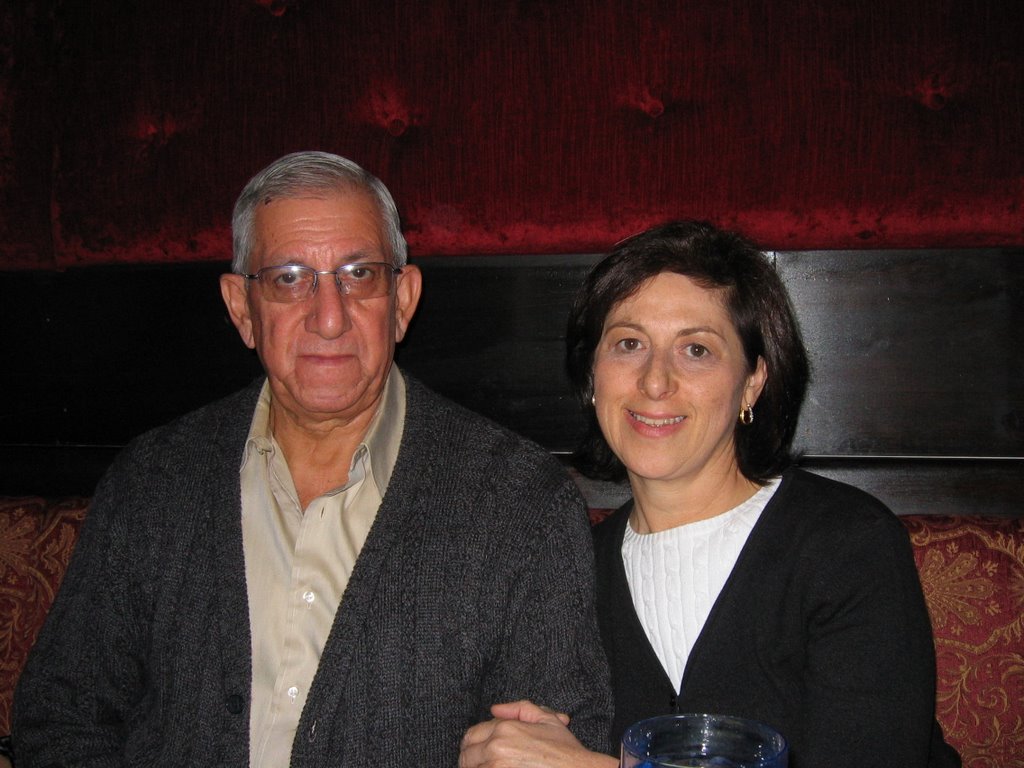 Y una tia, dos primas, y dos amigos de las primas.
Mi irreprimible tia Consuelo (hermana de mi papa), me vino a visitar de Sabado a Viernes. Ella, mami, y papi, recorrieron todo lo que la lluvia, el frio, y los zapatos incomodos los dejaron ver. Desafortunadamente, creo que no fue mucho. Pero con todo y lluvia, lo pasamos super bien. Fue bien chevere verla a Cocho despues de tanto tiempo.
Mis primas Andrea y Paulina (hijas de mi tia Nancy) llegaron con dos amigos el jueves para celebrar el Dia de Accion de Gracias (ie Thanksgiving, ie San Giving, ie Dia del Pavo). Mami cocino un pavochon (porque lo sazonamos bien con Adobo Goya) y los ocho comimos de lo lindo hasta caer en comas de triptofano. Fue tambien muy chevere ver a las "monas". [Asi le dicen a los habitantes de la costa en Ecuador, pero, en el caso de Andrea y Paulina, siempre he pensado que el nombre acierta. Al igual que de chiquitas las chicas todavia siguen siendo vivaces, piscoretas, y amigables, y bueno, pues bien "monas"!] Lo mejor es que ahora se que solo viven a dos horas de aqui, en Philadelphia, lo cual quiere decir que trataremos de verno con mas frecuencia que una vez cada cuatro anos.
Bueno, desafortunadamente estuve tan alegre y ocupada la semana pasada con mi familia, que no tuve uso de razon suficiente para sacar la camara hasta la cena final con mis padres, la cual ven arriba en un restaurante de sushi (hmmmmm, sushi). Por lo tanto si alguien tiene fotos que le gustaria compartir (MamiYPapi? Hello?) mandenmelas y yo las pondre en el interwebs.
Que vivan los leftovers!
Tuesday, October 03, 2006
Dear imaginary (nonexistent) reader,
I no longer live in Oakland or in the West Coast for that matter. I am now in DC. It's not as bad as it sounds. Sure, there are way more people in business suits, less mountains, no Ocean, and less of that Bay Area "yo no se que", but at least I've got the museums...
One thing though.... You can tell you're living in DC when you see ads on the metro like these: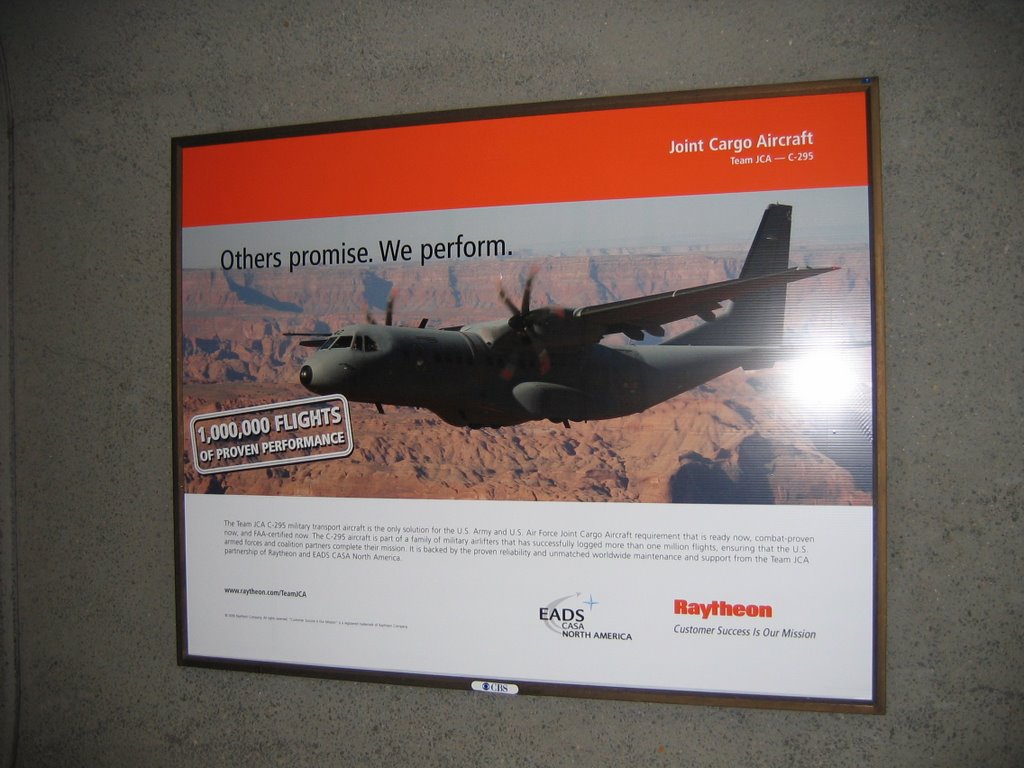
 I guess their target client demographic rides the Metro to work.
...And we're back
Have not posted in a while.
Have decided to post again.
Will try to be better at it.
Will try not to write like a moron.
Yeah.
Sunday, October 01, 2006
Dias y Flores
Pues hace unos dias me estaba sintiendo asi: El celular de Mark no estaba funcionando y lo extranaba mucho. Es dificil estar en casa y buscar formas de llenar las horas sin el. Los fines de semana son lo peor, y eso que tengo muchos amigos por aca. Tampoco estoy en casa sentada sin nada que hacer, voy a museos, a bazares, salgo a caminar, ceno con amigos, pero no es lo mismo que estar juntos en el sofa viendo la tele y hablando de nada. Tampoco ayuda el caso de que se que el esta pasando por tiempos dificiles en el trabajo. Tiene mucho trabajo, poco apoyo del resto de su lab, y mucho estres. Y yo por aca no puedo hacer mucho...
 El super balcon de Mark, y su maravillosa hamaca
Al menos este fin de semana habia muchisimas cosas para hacer. Al parecer todas las asociaciones, instituciones, y otras-ciones del area han organizado sus respectivos festivales para estas dos primeras semanas de Octubre. Entre otras cosas, tuvimos el Festival de Cine Latinoamericano, donde vi la pelicula Chilena "Se Arrienda" -- bastante buena, quizas con necesidad de un poco de editaje, pero con una historia que cualquiera puede sentir y soundtrack excelente.
Luego, yer fue la Feria de Libros de la Biblioteca de Congreso. Miles de personas en el Smithsonian Mall para escuchar a sus autores favoritos y hacer firmar sus libros. Yo pasee un rato pero no me quede mucho, no habia nadie quien me muriera por escuchar y no tenia libros para hacer firmar. Tal vez si ya me hubiera leido The Kite Runner como todo el mundo me recomienda habria tenido mas deseos de ver a Kahled Hosseini en persona... Si trate de conseguir una bolsa azul de C-Span Books (hay un canal que se dedica solo a libros!) que aparentemente TODO EL MUNDO tenia, pero cuando llegue a donde las estaban dando ya se habian acabado! Estoy tratando de gastar solo 20$ por semana asi es que cuando hay algo gratis, ahi estoy yo.
Despue me fui a el museo Corcoran, donde via arte y fotografia moderna, nuevamente sin tener que pagar un centavo. Mi amiga Mo me habia avisado que ayer aparentemente era el dia nacional del museo, y atraves de los Estados Unidos muchos museos tenian entrada libre de pago.
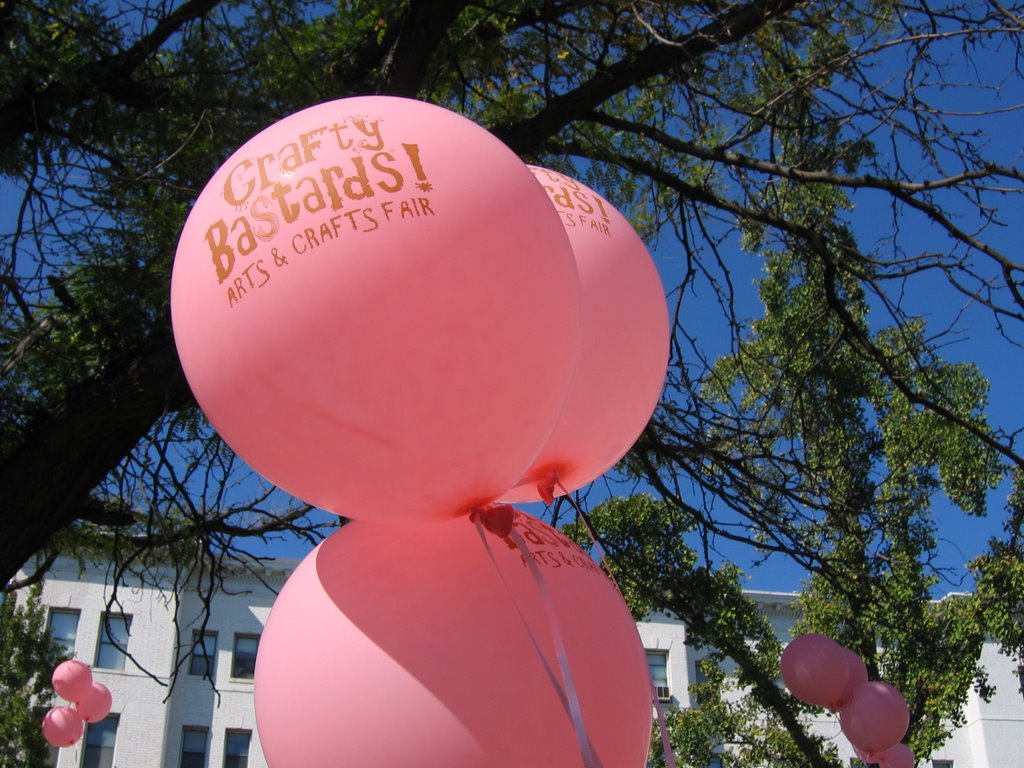
Y finalmente hoy cerca de mi casa hubo un festival de artesanias. Crafty Bastards es el nombre del festival, que en espanol podria traducrise como "Bastardos con Destrezas" o algo asi.
Fui con mis amigas Rebekah y Michelle. Lo pasamos bien y despues del festival comimos comida mexicana y tomamos sangria. Lo cual me puso sobre el borde en terminos de bebida y de dinero. Acabe gastando un total de ~30$ esta semana... y bueno, al menos me aguante hasta el domingo).
A fin de cuentas un fin de semana bueno, pero el proximo seguro sera mejor...

Saturday, September 16, 2006
Los ultimos dias de verano
 El fin de semana pasado mi barrio celebro su dia.
En estos dias vivo en Adams Morgan, un area de Washington cerca de un parque, repleta de restaurantes de todos tipos de comida, de bares y gente joven llendo a los bares, de caras negras, blancas y latinas. Es un oasis en el medio de DC, separado de los business suits, los maletines, los tacos altos, y la impresion de que al menos tres personas alrededor tuyo son abogado(a)s.
El fin de semana pasado, cuando las nubes todavia no traian lluvia, mi barrio celebro el final del verano.
A mi me encantan las fiestas de barrio. Cuando viviamos en Oakland, cada vez que habian fiestas le insitia a Mark hasta que se hinchaba y accedia a ir conmigo a sumergirse en las multitudes de gente.
Todas las fiestas siempre tienen elementos comunes, que de seguro se repiten en cualquier parte del mundo. Por ejemplo: comida chatarra. Mientras mas grasa y mas iteraciones de freidera mejor. Por ejemplo: los fried twinkies. No son mas que masitas de harina y azucar, rellenas de crema dulce, procesada y llena de preservativos, cubiertas con masa de freir y tiradas en un balde de aceite caliente. Delicioso! Al menos esta vez no tenian barras de chocolate cubiertas en masa y freidas. Una pena... Elemento en comun numero dos: Baile! De todas partes del mundo como duemestra la foto a la izquierda. Y siempre hay un grupo substancioso de expectadores que deja la timidez en su casa.
Los mas que me gustan son los grupos de ninos y jovenes que se esmeran en sus presentaciones de baile. Por lo general bailan hip-hop o breakdancing. Me hacen feliz.
Elemento numero tres: Musica! Grupos de rock en espanol (como arriba), blues, salsa, musica africana, bluegrass, jazz, etc, etc. Una innovacion que vi por primera vez en el dia de Adams Morgan: kareoke para las masas. El hombre  a la derecha se creia que era estrella de rock. Una y otra vez se ponian en la lista y esperaba su turno
para cantar una cancion de Ray Charles, o de Stevie Wonder, o de los Temptations. Desafortunadamente no cantaba muy bien... Pero siempre le daba todo lo que tenia, lo cual lo hacia un chiste y una inspiracion.
Pero lo mejor es el elemento #4: Sonrisas.
Suena cliche, lo se, pero es que es verdad. Por alguna razon el ser parte de una multitud comun, haciendo tiempo para olvidar el trabajo y las presiones y salir en masa a apreciar el clima y las cosas divertidas de la vida, automaticamente nos hace sentir mejor, que no estamos solos y somos parte del mundo. A lo mejor soy solo yo y mis sentimentalismos, pero a lo mejor no.
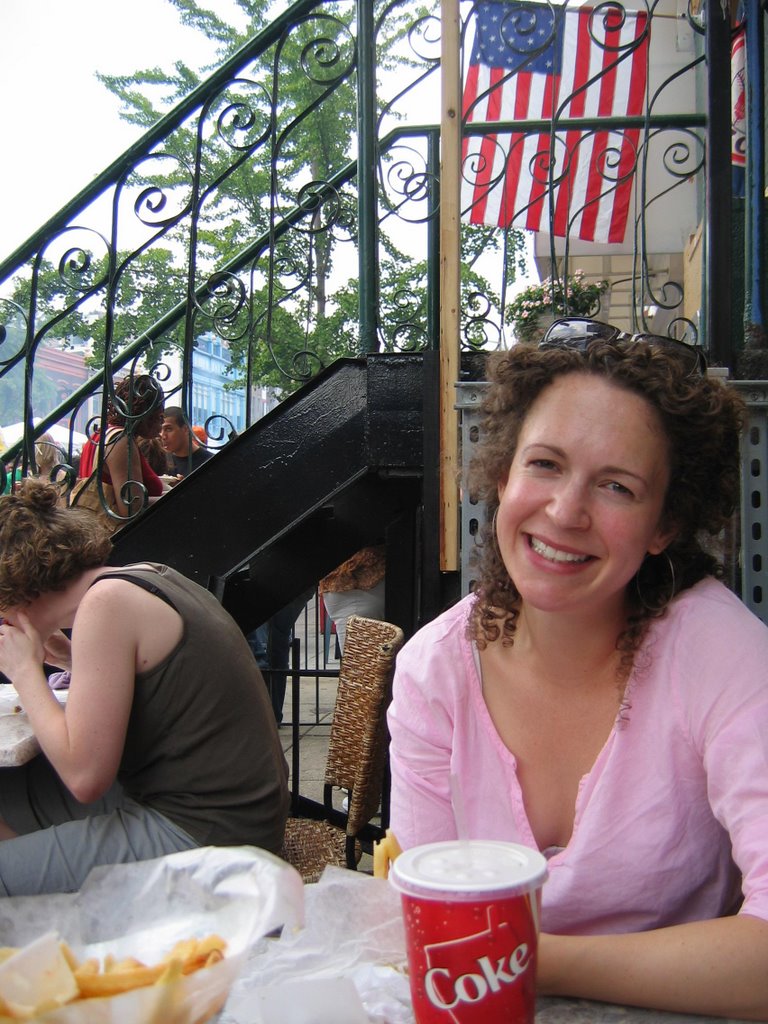
 (Mi amiga Ellie y una presentacion de baile africano)
 Monday, August 07, 2006


Monday, January 16, 2006
Poniendonos al tanto
Ayer hable con mami, papi y Marchi y me estuvieron contando de los lindos dias de playa que habian estado pasando y de lo bien que lo pasaron visitando la familia de Adrian en Costa Rica.
Mark y yo desgraciadamente no pudimos ahorrar suficiente dinero para acompanarlos y pasamos las Navidades en California, sin familia y sin playa, pero el uno con el otro y con el espiritu navideno. El dia de navidad abrimos los regalos que nos habian mandado Santa Clos (por via de Santa Kelly y Santo Oswaldo) y por la tarde nos fuimos a ver King Kong. Para Ano Nuevo Mark cocino unos sandwiches de carne rostizada enviados directamente desde Chicago como regalo de la familia de Mark (la familia de Mark siempre nos manda carne, eso es tema de discusion para otro posting) y yo hice un "playlist" de musica festiva y bailamos salsa y merengue hasta la llegada del 2006. Al otro dia celebramos con tremendos helados. Y el dos de enero llego Julieta! La nueva adicion a la familia. Juli es una gordita hermosa y no puedo esperar a conocerla en persona.
Ahora me encuentro en Washington DC pasando frio, y deseando estar con mami, papi y Marchi en Puerto Rico. Tan pronto pueda pongo fotos de mi estadia por aca. Por el momento sin embargo voy a descargar algunas fotos de el dia del pavo (26 de Nov.) y de las navidades este ano. Aca van!

Pan y dip de alcachofa servidos en platos tipicos argentinos


Y tambien le hice un sobrero para los frios de Wisconsin


Esta seguro que si se lo jampo toito


Monday, November 14, 2005
El Monopolio del "Monopolio"
Mira lo que encontre en el "internets":
http://www.monopolypuertorico.com/
Un novedoso producto dispuesto seguramente para el market que consiste de aquellos de nosotros que extranamos el terru~no borincano.
Me pregunto si de verdad habra una correspondencia. Si el sombrerito y el dedal han sido reemplazados por una alcapurria y una chancleta. O Si Park Place se ha convertido en Palmas del Mar, Vermont Avenue en la 65 de Infanteria, y Mediterranean en el Residencial Manuel A. Perez...
Entre el Cielo y el Suelo
Celebración tardía del día de los muertos:
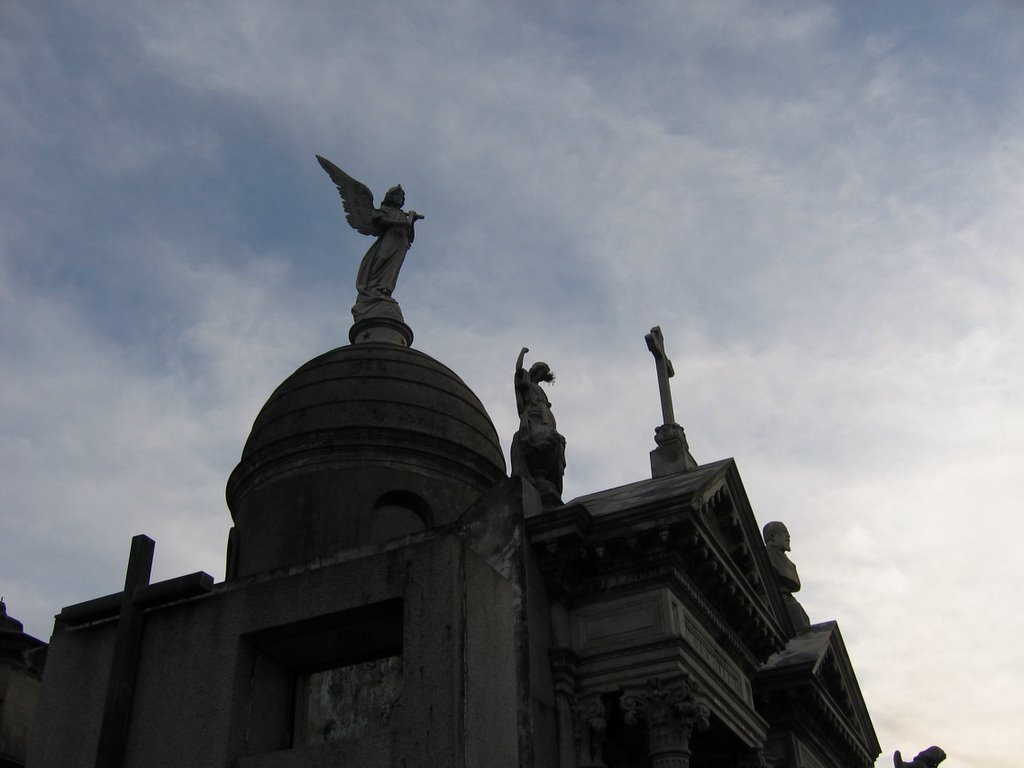 Angeles para un final. Mausoleos de La Recoleta. 22 de junio del 2005.
Los únicos ciudadanos que hoy plagan las mansiones, palacios y fortalezas de este cementerio son los gatos que de esquina en esquina nos maullaban como para reclamarnos lo que hacíamos invadiendo su espacio.

La Plaga.
Gatos en La Recoleta. 22 de junio del 2005.
Despues de pasear por el cementerio Mark y yo fuimos al centro cultural de la Recoleta, compramos boletos para De La Guarda, y (sorpresa de sorpresas) nos tomamos un cafe con medialunas desde la terraza del Buenos Aires Design Center. Desde ahí vimos el atardecer sobre la Plaza de Francia. Si hubiera tenido mas energías (y menos dolor en los pies) hubiera aprovechado para ver bien la bienal nacional de arte en El Centro Cultural. A fin de cuentas solo le pude dar una vistada de prisa el ultimo día en Argentina en los cinco minutos antes de que se supone que empezara De La Guarda. Para la próxima como siempre.
Friday, November 11, 2005
Bienvenidos, Welcome

"Bienvenidos" Rosario, Argentina Junio 11, 2005. Fotografo: Mark Neff
Hace tiempo que no pongo nada por aca pero ahora que me han descubierto no puedo decepcionar. Creo que de ahora en adelante mezaclare las fotos de Argentina "2005" con fotos de otros viajes que hemos tomado desde que me regalaron la camarita. Tal vez de vez en cuando tambien pondre otras fotos de la vida cotidiana y antes de que se note puede que esto sea un blog de verdad. (Dios mio, la responsabilidad!)
El dia de la foto estabamos toda la familia Medina/Gimenez y Armoa en el Club Nautico celebrando el dia del padre (*Me han corregido que aparentemente no era el dia del padre--la verdad que soy una gallina turuleca!) con un asado espectacular (para ver que quiere decir "espectacular" favor ver las entradas anteriores). La sala de merienda la compartiamos con otros grupos que tambien celebraban a sus respectivos padres. De repente entra esta pareja, que habian sido contratados por uno de los otros grupos y ahi mismo dan un show de tango bellisimo. Fue un momento muy especial. Nos gusto tanto el show que Mari decidio contratar a la pareja para la fiesta de cumple de la Chola unas semanas despues.
Nada dice "Bienvenidos" a la Argentina tan bien como un suculento asado con familares y amigos y un show impromptu de tango de salon.
Thursday, September 01, 2005

Tuesday, August 30, 2005
LOTERiA

Local abandonado (?) en la Avenida 9 de Julio (?) cerca de la feria de antiguedades. Rosario, Argentina. Junio 11, 2005.
Thursday, August 25, 2005
Mari y Mark en el Retro
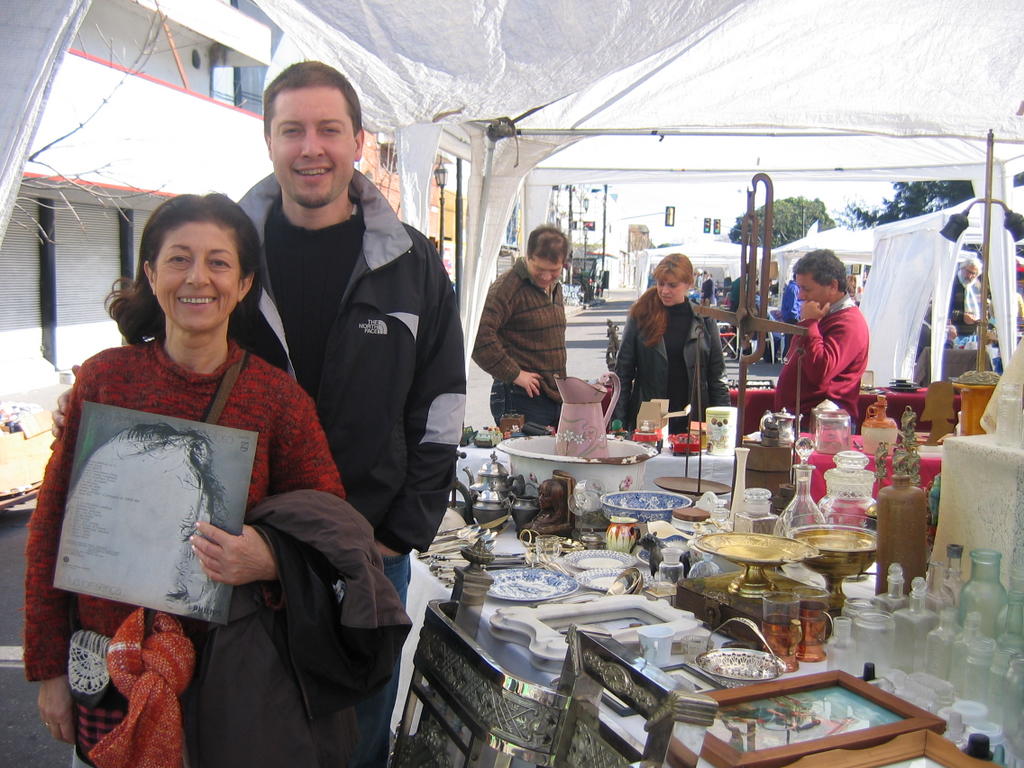
Mercado de Antiguedades de Rosario, 11 de Junio del 2005.
Este mercado ocurre cerca de la estacion de trenes, al lado de las vias, cada domingo del mes. Entre vasijas y libros viejos, joyeria, medallas y fotos viejas, mi tia Mari encontro un disco de una cantante Brasilera de los 60. La mujer tenia una voz divina. Mari lo compro y mi primo se lo iba a convertir a CD. El senor que se lo vendio era un personaje. Un viejito amante de la musica con los espejuelos mas gruesos que he visto y un conocimiento enciclopedico.
Me encantan estos mercados de antiguedades. En Buenos Aires hay algunos cuantos y el mas famoso por supuesto es el de San Telmo.
Tuesday, August 23, 2005
A donde van los desaparecidos

Desaparecido/a numero 650 del area de Rosario. 11 de junio de 2005.
Un artista local los decidió plasmar en la memoria colectiva pintando bicicletas fantasmas--de pie a pesar de no tener dueños--en lugares através de toda la ciudad.
Los años del 1976-83 marcan una mancha en la historia Argentina. Utilizando tácticas de mentiras que creaban miedo e inseguridad, un grupo de genocidas que creían y decían trabajar por el bienestar de la nación, lograron aterrorizar al pueblo argentino y desparecer a 30,000 seres humanos. ¿Como es posible que esto pueda haber sucedido en un país que nos dio Borges, Cortazar, y Piazzolla? Tal vez no sea tan difícil de imaginar en medio del clima de represión, de "moralidad" y de "todo para derrotar al terrorismo" en el que vivimos hoy día...